
Block Island North Lighthouse
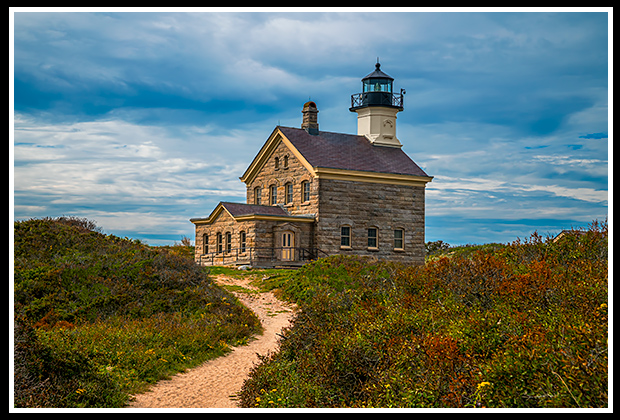
Block Island (New Shoreham), Rhode Island
Built in 1829
Regional Stories | ||
Location:
The lighthouse sits on Sandy Point, off Corn Neck Road, at the north end of Block Island.
| Latitude: 41° 13' 40" N |
| Longitude: 71° 34' 33" W |
Historic Stories:
Block Island is a popular vacation spot known affectionately by tourists as the "Bermuda of the North," for its beaches and recreation. However, for centuries it was also known among mariners for its hazardous reefs and frequent fog, especially a mile-long reef extending from Sandy Point at the tip of northern Block Island. Within roughly a 20-year stretch between 1819 and 1838, 59 vessels were wrecked on or near the island. The site is also where currents from Block Island Sound and Long Island Sound collide, throwing breaking waves over Sandy Point in all kinds of inclement weather.
Block Island North Light lighthouse was established in 1829, consisting of two lights on opposite ends of the building to warn mariners away from the dangerous Sandy Point. Due to severe erosion of the sand and rocky gravel, the first brick lighthouse was washed away after only a few years in service.
The Wreck of the Schooner Warrior by the Lighthouse
Sometimes shipwrecks still occurred even after the lighthouse was built. In a severe gale on April 9, 1831, the schooner Warrior from the Cape Cod region, carrying a load of cotton and calico, wrecked on a sandbar at the northern extremity of the bar on Sandy Point. She was only 150 yards from Block Island North Lighthouse. In fact, the keeper, William A. Weeden, could see the wreck in the distance during breaks in the storm. However, the ferocity of the winds prevented him from attempting a rescue into the crashing surf along the point, as the wreck was too far out in the churning waters. The frustrated keeper could only watch from the safety of the tower. Keepers in those days needed to make sure the lights were burning in any storm, and they were usually refrained from any rescue attempt if it involved peril to their own lives.
As the storm intensified, huge waves from the two currents meeting over the bar would repeatedly break over the Warrior, which was stuck on the submerged reef, washing some sailors off the deck and drowning them. One man tried to time the undertow of the breaking surf to wade over the gravel bar to shore as the waves briefly receded, but the distance was too far. A huge wave came over him, knocked him over, and dragged him out to sea.
The remaining survivors had lashed themselves to the rigging, hoping to ride out the storm, but the waves were too much for the Warrior, which broke apart, drowning the seven survivors. In all, 21 crew members perished in the storm, and the seven who had remained on the ship were later found and buried on Block Island.
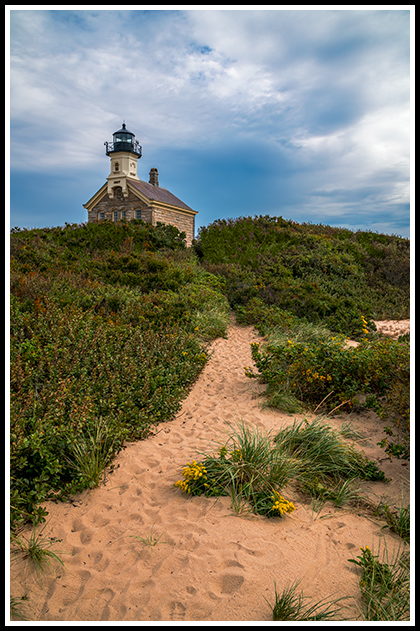
Over the years, two more granite versions of the lighthouse were built. The reconstructed version of the original also had two lights, but too many complaints from mariners led to the third rebuilt version having just one strong light. Erosion and shifting sands over the years also contributed to its demise. The fourth and current lighthouse was also constructed of granite in 1867 and set back from Sandy Point, although it is still only two feet above mean high water.
The Larchmont Collision and Rescue of Survivors
On a stormy winter night with freezing temperatures, on February 11, 1907, the side-wheel paddle wheel steamer Larchmont was heading with a large group of passengers from Providence, Rhode Island, to New York City. She was steering into the storm and had reached about three miles from Watch Hill Lighthouse in Rhode Island around 11 P.M., when suddenly Pilot Anson noted that the coal-laden schooner Harry P. Knowlton was heading straight for the ship. The schooner crashed into the side of the Larchmont, creating a huge gaping hole in the helpless steamer. The Harry P. Knowlton slipped back away in the darkness as the Larchmont started taking in water, as panic ensued on deck. The Larchmont sank in less than an hour.
AAbout half a dozen boats and a couple of rafts were able to be released as they tried to reach either Watch Hill Lighthouse or the area near Block Island North Light, both some miles away in the darkness and churning seas, even though winds were blowing toward Block Island.
Some of the passengers of the Larchmont made it near Sandy Point, following the flashing light from Block Island North Lighthouse. Keeper Elam Littlefield and his family, awakened by their dog's barking, helped the frozen survivors who had come ashore. He also alerted the lifesavers at the local station and nearby fishermen. The freezing survivors began arriving by daybreak, most half dead from exposure to the freezing temperatures and winds, and many could barely walk when taken off the boats.
Due mostly to the freezing winter weather, over 143 people perished, and only 19 survived, including ten members of the crew and only nine passengers. Members of the Harry P. Knowlton made it to shore safely, but most needed medical help due to exposure.

Larchmont Paddle Wheel Steamer
Note: For more details regarding this famous story, select the link "Larchmont Collision" at the top of the page to be directed to my Lighthouse Stories section.
Block Island North Lighthouse was automated in 1956 and closed in 1973, when a nearby skeleton tower replaced it. The federal Fish and Wildlife Service acquired the lighthouse and 28 surrounding acres and later established a wildlife refuge for many bird species. The lighthouse was left unattended, and after years of vandalism, it was boarded up.
To raise funds to begin preserving the deteriorating structure, the Town of New Shoreham established the North Light Commission. In 1983, the town reached an agreement with the Fish and Wildlife Service to buy the lighthouse and two surrounding acres for one dollar. After years of fundraising, the lighthouse was restored and relit in August 1989, and the nearby skeleton tower was removed.
In 1993, a small museum opened on the first floor, displaying the lighthouse’s original fourth-order Fresnel lens from its lantern room; a more modern light had been installed in the tower.
In 2001, a routine inspection found that the iron tower was deteriorating and needed to be replaced. Donations, along with federal and state grants, raised nearly 700,000 dollars to replace the tower, restore its lantern room and roof, and complete other necessary repairs. Construction began in 2008, with a temporary skeletal light tower installed near the lighthouse. The lighthouse was relit during a ceremony on October 23, 2010, under a full moon. As a condition of the restoration project, the original fourth-order Fresnel lens was returned to its rightful place in the lantern room.
Places to Visit Nearby:
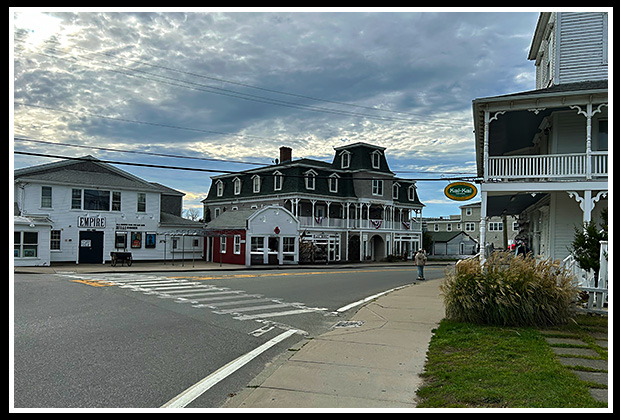 |
Visitors may find most of this island seems stuck in the 19th and early 20th centuries with its Victorian hotels, inns and B&B’s. |
The Empire Theater, built originally in 1882 as a roller skating rink, stands as one of the very few classic movie theaters remaining in the United States. For those who want a traditional old fashioned shopping experience, you can find tiny shops, and explore artisan’s personal homes for hand crafted gifts, photography, and jewelry.
Block Island provides many activities for sporting enthusiasts and for those that just want to relax within its 17 miles of beaches.
The two-mile Crescent Beach offers picturesque biking trails and is part of the Block Island Greenway network, which consists of 28 miles of trails.
If you want more seclusion, just a few minutes by bike away are deserted beaches. With miles of open beaches, you can fish from the shore, or take a charter boat departing from New Harbor for bluefish, striped bass, and flounder.
 |
The views of the beaches with their jutting expansive cliffs are worth the hike if you’re up for the 4-mile trek along the shoreline. |
If taking a car, moped, or bike there are some turn offs along the road to find expansive views.
| Bring plenty of water, as Block Island North lighthouse is not near any service areas. | 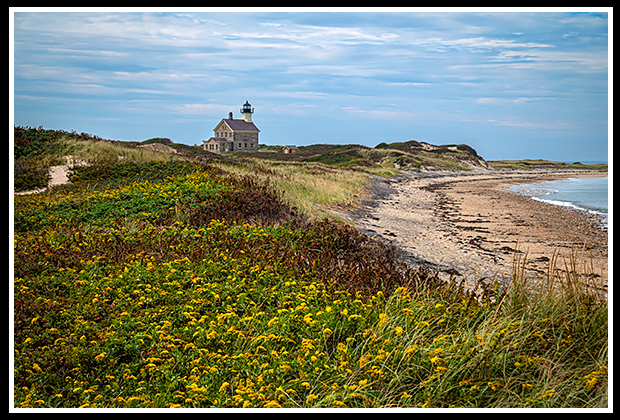 |
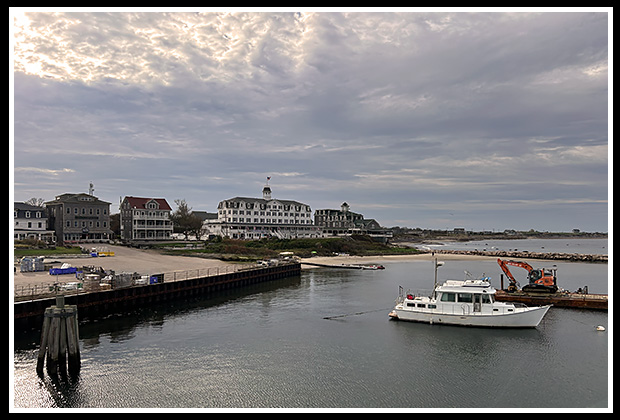
Enjoy the natural wonders of the 127-acre Block Island National Wildlife Refuge near the lighthouse. The shoreline area runs from Settler’s Rock to Sandy Point and out to Block Island North Light, and then on to Great Salt Pond. This is an ideal area for walking, bird watching, and breathtaking views. Setter's Rock marks the landing point of European settlers of Block Island in 1661.
Directions to and from Ferry Dock:
- Block Island is accessible by taking the Block Island Ferry from Point Judith, RI.
- Take Sandhill Cove Road from Point Judith lighthouse, to Galilee ferry landing.
- Upon reaching Block Island, the lighthouse is a 4-mile walk from the ferry terminal. You can also take a taxi, or bike there as well.
- From the ferry dock on Block Island at Old Harbor, take Water Street to Dodge Street.
- When you see a Post Office on the corner of Corn Neck Road, take a right and continue on Corn Neck Road to the end.
- The lighthouse is at least a half-mile walk through pebbly beach sand from there.
Contact Info:
North Light Commission
P.O. Box 220
Block Island, RI 02807
(401) 466-3200 or (401) 466-3213
Block Island Ferries and Charter Service
Block Island Ferry
(401) 783-4613
Provides traditional and fast ferries to Block Island from Point Judith and Newport, RI.
Block Island Express
Out of New London, CT
Phone: (401) 466-2212
Viking Ferry
Out of Montauk, NY
Phone: (631) 668-5700
Snappa Charters
Offers specific lighthouse tours around Narragansett Bay and to Block Island in addition to other adventure tours like sport fishing, whale watching, and shark tagging.
Mailing Address: 2 Congdon Dr., Wakefield, RI 02816
Boat Location: 33 State Street, Narragansett, RI 02882
Boat/Cell (401) 487-9044
Email: snappacharters@cox.net
Books to Explore
New book coming out August 1, 2026! 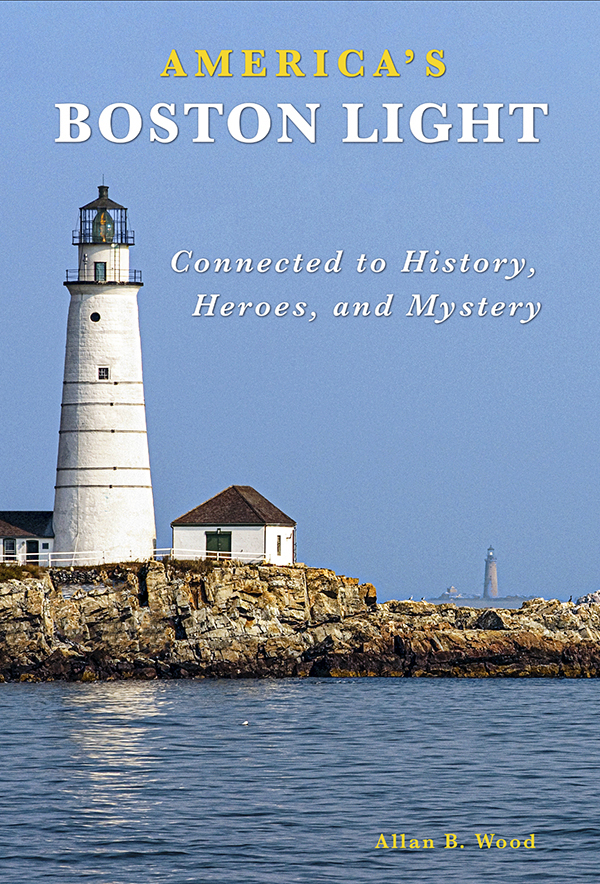 Available in paperback. |
America's Boston Light: Discover Boston Light’s 310-year history and its ties to key historical events, all presented with plenty of color and vintage images. Learn the story of its first lighthouse keeper, including his tragic death, and explore the social customs of the colonial era. Find out about the lighthouse’s connections to notable figures like Ben Franklin and uncover intriguing mysteries. Read about shipwrecks and the rescue missions carried out by the keepers, and years later, coordinated rescues with the Hull Lifesavers on shore. |
New England's Haunted Lighthouses: 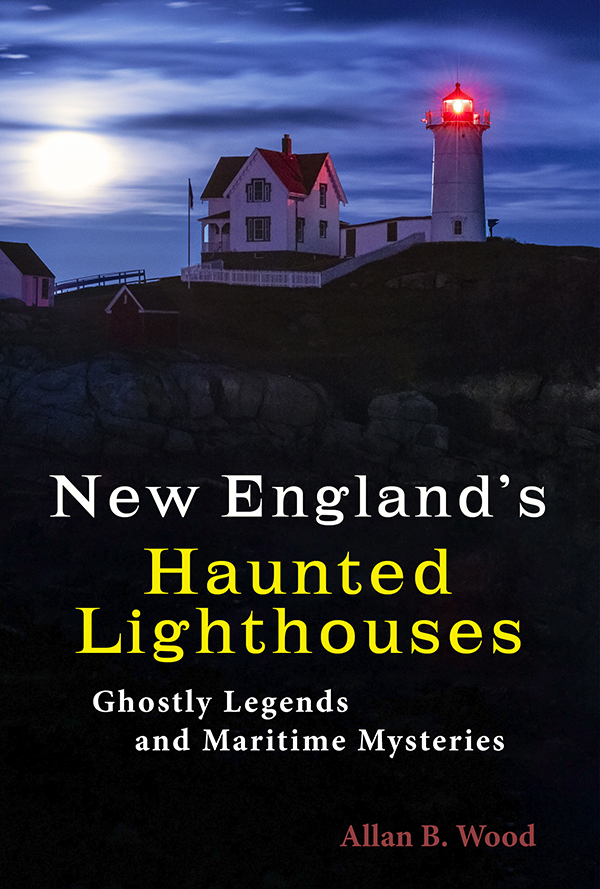
Available in paperback. |
In this image-rich book, discover the historical secrets surrounding the haunted lighthouses of New England! Respectable witnesses have reported numerous ghostly encounters, including the spirits of devoted keepers who refuse to leave, phantom ships, victims of misfortune, restless souls from nearby shipwrecks, and more. Learn about the historic facts leading up to the folklore of the Palatine ghost ship, also known as the "Flying Dutchman." |
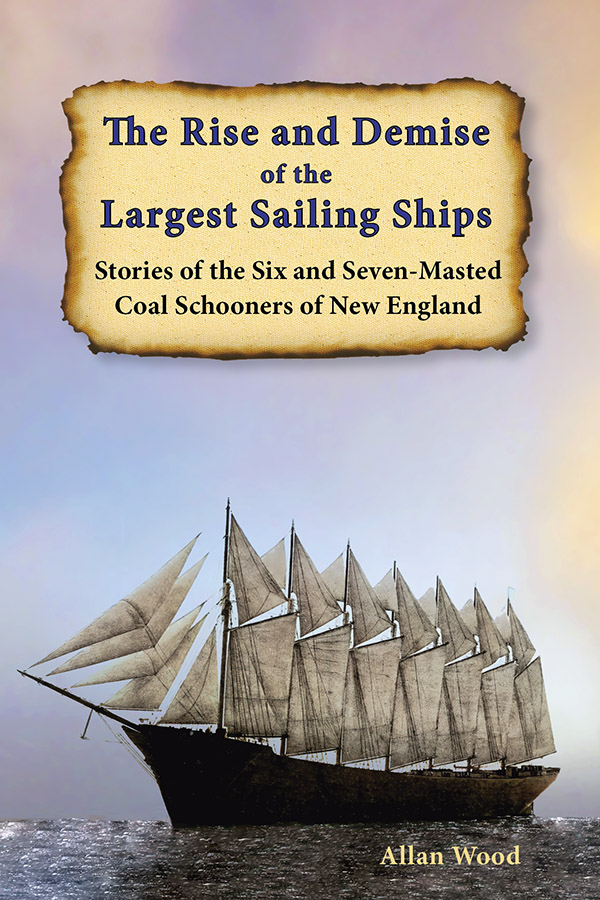
Available in paperback, hardcover, and as an eBook for all devices.
|
The Rise and Demise of the Largest Sailing Ships: Stories of the Six and Seven-Masted Coal Schooners of New England In the early 1900s, New England shipbuilders constructed the world’s largest sailing ships amid social and political reforms. These giants of sail were the ten original six-masted coal schooners and one colossal seven-masted vessel, built to carry great quantities of coal and building supplies, and measured longer than a football field! This self-published book, balanced with plenty of color and vintage images, showcases the historical accounts that followed these mighty ships. |

Lighthouses and Coastal Attractions of Southern New England: Connecticut, Rhode Island, and Massachusetts This book showcases special human interest stories from each of the 92 lighthouses from the southern coast. There are many indoor and outdoor coastal attractions and tours you can explore, including Block Island in Rhode Island. Look inside! |
|
New England Lighthouses: Famous Shipwrecks, Rescues & Other Tales This image-rich book contains over 50 stories of famous shipwrecks and rescues around New England lighthouses, and also tales of hauntings. You'll find more details and imagery in the story of the collision between the Larchmont and the Harry P. Knowlton by Watch Hill Light, and how Keeper Littlefield helped the survivors who landed by Block Island North Light. |
You'll find this book and my lighthouse tourism books from the publisher Schiffer Books or in many fine bookstores.